Content
Geology
Notice
Applications are no longer being accepted as of December 6, 2025.
Program Features
Focus and Range
Students dive deep in geology while taking a wide variety of courses across all areas in the College of Arts and Sciences. Alumni are academically well-rounded, eager to keep learning, and use collaboration and communication skills to address complex problems and make a positive impact professionally and personally.
1-to-1 Academic Advising and Career Coaching
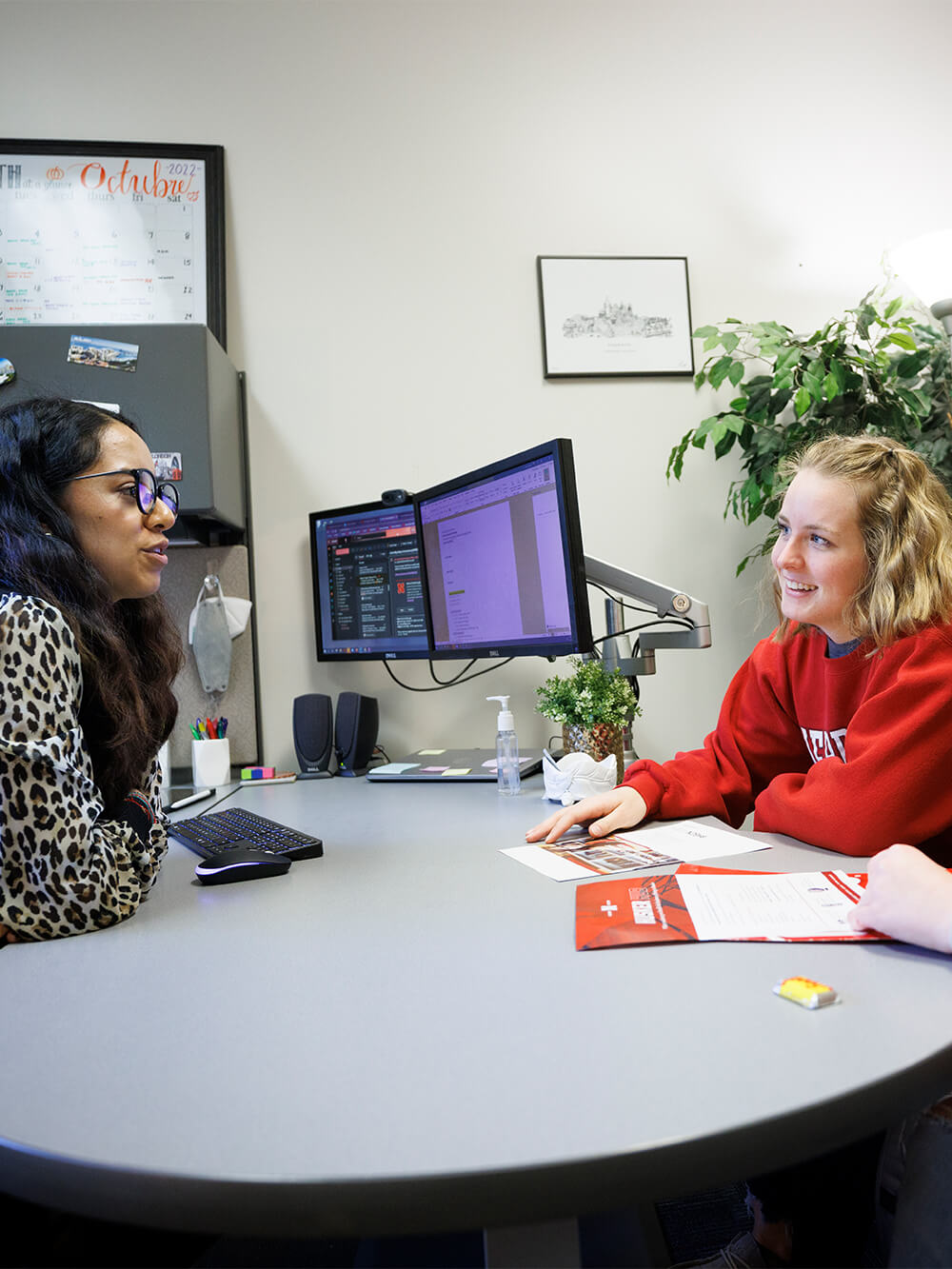
Faculty, academic advisors, and career coaches assist with making a one-of-a-kind degree plan. They are focused on each student's success, while at Nebraska and after graduation, whether the goal is employment or graduate/professional school.
Learn from the Experts
Geology faculty specialize in over 40 earth, air and water areas and are part of geological research projects worldwide.

Notable Courses
Dynamic Earth (GEOL 101)
Examination of minerals and rocks; investigation of geological processes and their products.
Mineralogy (GEOL 200)
Crystallography and mineral optics, mineral classes, crystal chemistry and mineral identification methods. Includes microscope techniques and field methods.
Sedimentology and Stratigraphy (GEOL 300)
Sedimentary rocks and processes, their descriptive parameters, occurrence, origin and significance. Stratified rocks in time and space, and methods of correlating geologic units.
Structural Geology (GEOL 400)
Folding and faulting of rocks, texture and structure, cleavage, joints, dikes and unconformities. Structural interpretation of geologic maps; plate tectonics, mountain belts and regional structures.
Groundwater Geology (GEOL 488)
Occurrence, movement and development of water in the geologic environment.
Geophysics (GEOL 441)
Geophysical techniques to study the Earth including seismology, gravity, magnetics and heat flow.
Huskers Do Big Things
Internships
- Geologist, Shell Inc.
- Integrated water management specialist assistant, Nebraska Department of Natural Resources
- Student intern-hydrology, United States Geological Survey
- Geology intern, Twin Rivers Testing & Environmental
- Integrated water management intern, Nebraska Department of Natural Resources
Careers
- Geologist, Marathon Oil Company
- Hydrogeologist, United States Geologic Survey
- Geologist, Mosaic
- Mine Engineer, Martin-Marietta
- Ecohydrologist, cbec eco engineering
- Associate Professor, University of Otago
Graduate Schools
- Master’s degree, Material Science, University of Dayton
- Master’s degree, STEM Education, University of Iowa
- Master’s degree, Geophysics, California Institute of Technology
- Master’s degree, Hydrogeology, University of Nebraska-Lincoln
- Ph.D., Geology, University of Michigan
Outside the Classroom
Depending on their major, interests, and goals, students conduct research, work as an intern, study abroad, become a leader, or serve their community. The university’s Experiential Learning requirement ensures one of these transformative learning experiences; students in the College of Arts and Sciences typically complete at least two.
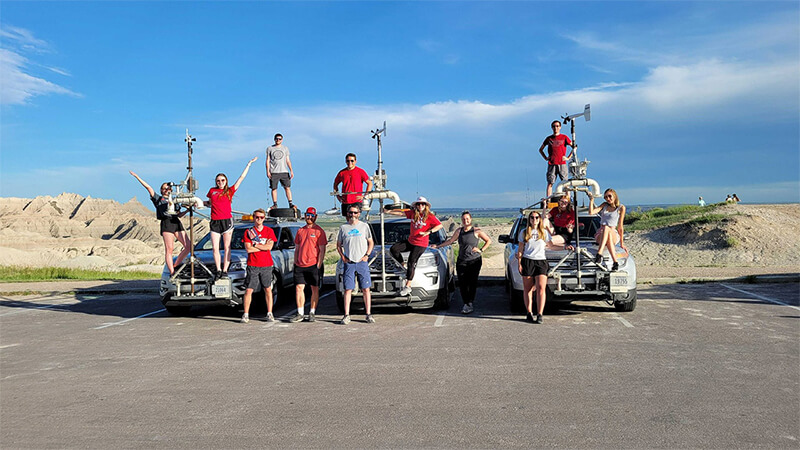
Students work alongside a faculty member as a research assistant or design their own research project through the Undergraduate Creative Activities and Research Experience (UCARE) program.

Students explore a variety of local, national and international internships, and career coaches can identify opportunities and document the skills and experience gained on the job.
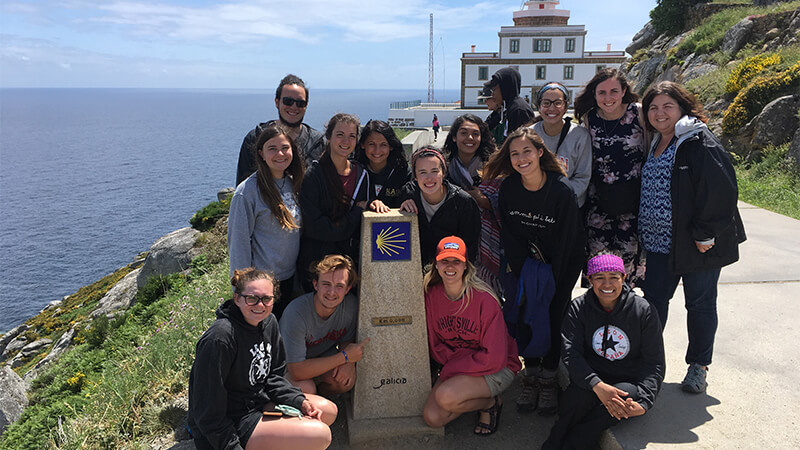
Students connect with the Global Experiences Office to find an affiliate program in almost any location.
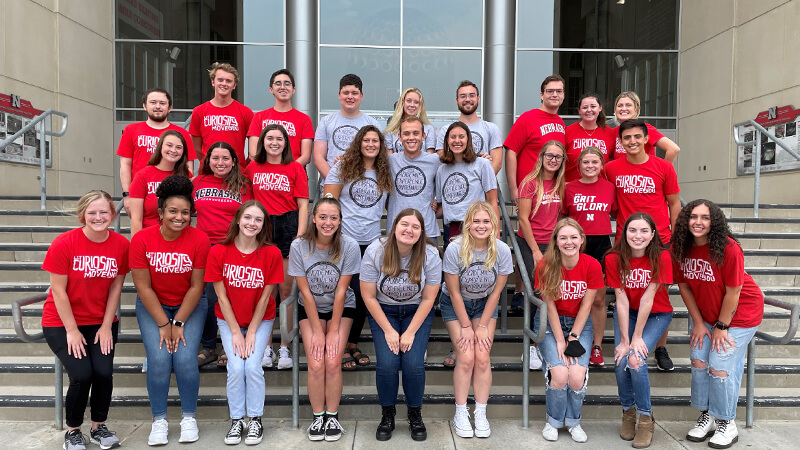
Over 540 student organizations are available at Nebraska for students to meet others who share their interests, become a leader, or serve the community.

Featured Faculty
Cara Burberry, Associate Professor
Dr. Burberry’s research interests are the way strain is partitioned during deformation and the way pre-existing fabrics can affect deformation. She leads student researchers in the Deformation Research Group and has conducted fieldwork in a variety of locations in the U.S. and abroad. She teaches courses in topics ranging from structural geology to tectonics and leads the annual Walker Trip—9 days across the western U.S.
Academics & Experiential Learning
- Our motto is Academics + Experience = Opportunities. Employers and graduate/professional schools are looking for students who have a strong academic background and hands-on experience.
- Students engage in research or internships, and many study abroad or get involved in service or leadership on campus and beyond.
Career Preparedness
- CASC 200: Career Development in Arts and Sciences. Students explore interests, abilities and values while identifying career options and preparing to apply for internships, jobs or graduate/professional school.
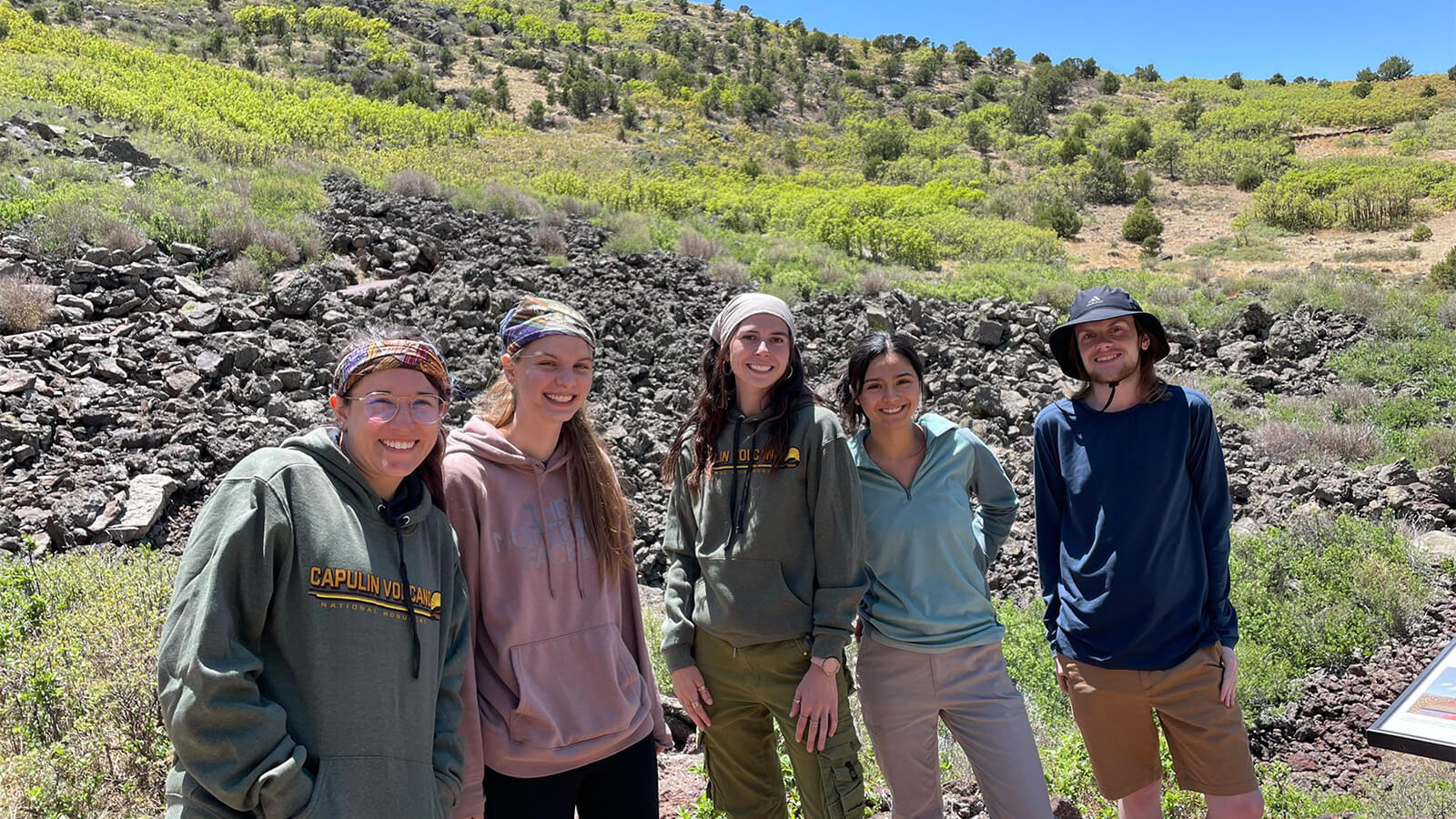
- In the Summer Field Course, students build skills and knowledge alongside other Huskers and partner institutions during a 6-week experience in a geologically classic area.
Community
- Students in Earth and Atmospheric Science (SEAS) aims to build connections with peers and faculty as well as guest speakers and alumni.
- Field tours study the geology of the Western United States while earning credit.